
Get Ready to Be Amazed: 30 Incredible landmarks and archaeological sites to Visit in Portugal

Unveil the top 30 must-visit landmarks and archaeological sites in Portugal with our curated list. Immerse yourself in 30 best landmarks and archaeological sites or discover hidden treasures with 30 must-visit landmarks and archaeological sites. Don’t miss 30 top-rated landmarks and archaeological sites to experience Portugal’s best.
Information about Portugal
Portugal is located in southwestern Europe, specifically on the Iberian Peninsula. Some ancient Arab accounts say that the naming of this country goes back to the word orange, as the Arabs noticed the abundance of orange trees in the area when they settled there and called it “the land of oranges”. It is definitely a country in which many peoples and civilizations settled, including the Phoenician, Carthaginian, Roman and Ottoman, and therefore you will find throughout the country many amazing monuments from these different civilizations, and you will also find many museums that explain the history of the country in detail. Portugal was ranked 13th in the list of the most peaceful countries, which made it a distinguished and famous tourist destination in the world. Portugal is also famous for the diversity of its natural manifestations, as there are many lakes, rivers, mountains, caves and many others. The country is distinguished by its old houses and buildings of many colors, and it also enjoys its mild climate, which allows it to be visited most of the months of the year. As for the capital of Portugal, it is the wonderful city of Lisbon, so do not miss the opportunity to visit this amazing country!
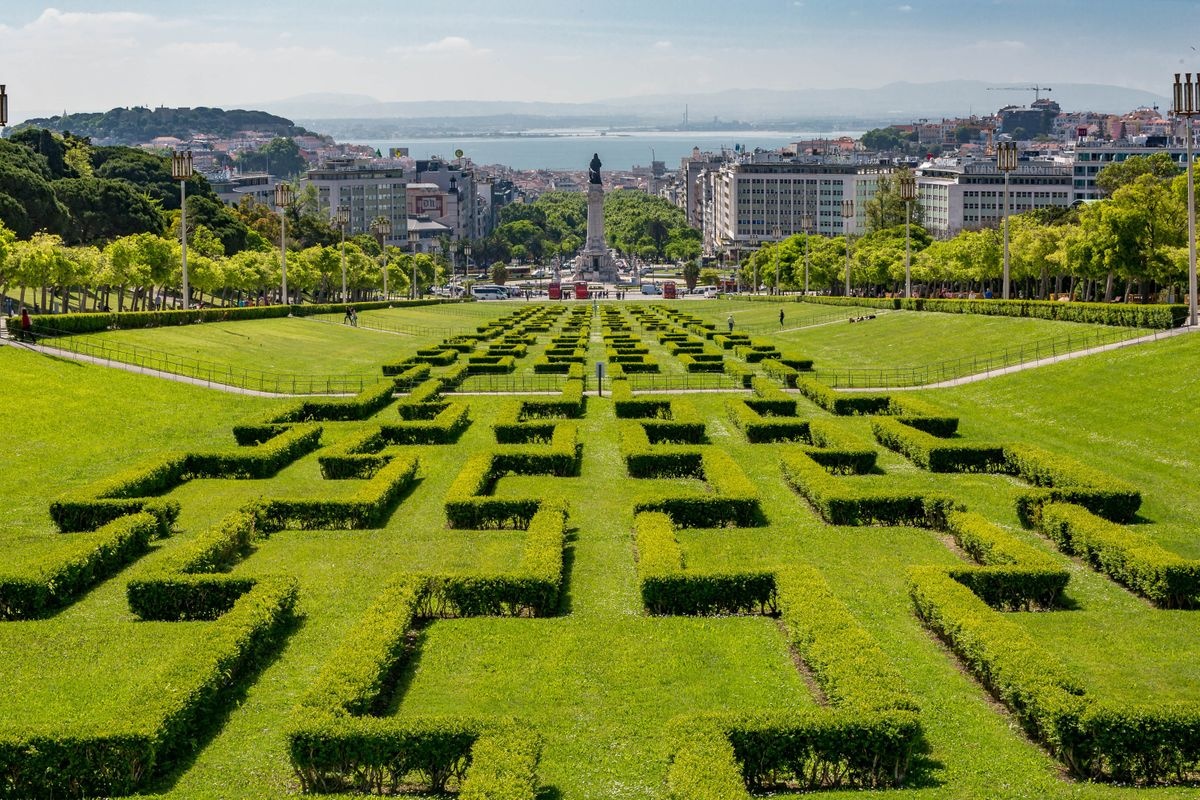
A list of the best Landmarks and archaeological sites in Portugal
Experience the best landmarks and archaeological sites that Portugal has to offer with our expertly chosen list of top-rated destinations. Our team has scoured visitor reviews and evaluations to bring you only the best options for your next adventure.
1- Tavoras Palace

Tavoras Palace – The 16th-century Palace of Tavoras is located on Paseo das Mordomas da Romaria in Viana do Castelo, and is considered one of the most beautiful palaces in the city. It was built by Fernando Brandão, who wanted to make it the seat of Abreu Távora. After several years, it was renovated by the architect Manuel Pinto Villalobos, and in the second half of the nineteenth century, the building was purchased by the city council for use in municipal services.
Place address: Passeio das Mordomas da Romaria, 4900-350 Viana do Castelo, Portugal
Click here to go to the coordinates of the place on Google Map
Looking for more : The best Tourist palaces in Portugal
2- Convent of Christ

Convent of Christ – The Roman Catholic Monastery of Christ, ornately carved, is located on top of a high hill, and has origins dating back to the Middle Ages. It is one of the unique attractions and monuments that appeal to many tourists in the Western world, as it has a majestic architectural design, and includes a group of important memorabilia that illustrate 7 Centuries of Portugal’s history and decisive moments in the West.
Place address: Igreja do Castelo Templário, 2300-000 Tomar, Portugal
Click here to go to the coordinates of the place on Google Map
Looking for more : The best Things to do in Portugal
3- Monastery of Sao Martinho de Tibaes

Monastery of Sao Martinho de Tibaes – The Monastery of São Martino de Tepaís is located about 6 kilometers from Braga and was built on the site of a former Roman villa called “Tevelanes”. It was founded by Saint Martin of Dume in the 6th century during the reign of Teodoro’s Sueve. (Teodomiro), and in 1078 the knight Paio Guterres da Silva decided to rebuild the monastery, and later, in 1567, the monastery became the Portuguese and Brazilian seat of the Benedictine order. In the 17th century, the present building was completed, and became one of the most imposing in the country, with four arcades richly decorated according to plans by Manuel Álvares, gilded carvings and baroque ornamentation by André Soares, and a baroque organ.
Place address: R. do Mosteiro 59, 4700-565 Parada de Tibães, Portugal
Click here to go to the coordinates of the place on Google Map
Looking for more : The best Things to do in Portugal
4- Lapa Church

Lapa Church – Constructed in such a way as to intertwine with the arcadian buildings of the Republic Square in the historical part of Braga, the Lapa Church is a neoclassical building dating from the mid-eighteenth century, its façade with carved vases stands out from the arcadian monoliths, the interior of which is decorated with The church with its magnificent 19th century azulejos tiles.
Place address: Praça da República 27, 4710-305 Braga, Portugal
Click here to go to the coordinates of the place on Google Map
Looking for more : The best Tourist churches and monasteries in Portugal
5- Bravaes Monastery

Bravaes Monastery – Bravais Monastery is a former Benedictine monastery founded at the end of the 12th century, and its main portal decorated with allegorical and geometric elements stands out from its construction. It can be said that this church recognized as one of the masterpieces of Portuguese Romanesque art and classified as a national monument since 1910 is a well-preserved historical monument It has an undeniable regional historical importance and exceptional scientific and heritage value.
Place address: 4980-020, Portugal
Click here to go to the coordinates of the place on Google Map
Looking for more : The best Tourist churches and monasteries in Portugal
6- Lapa Church

Lapa Church – The construction of the Lapa Church began in 1755 in response to the desire of the Brazilian priest Angelo Sequeira, and it took more than a hundred years to build it due to the French invasions of Portugal, and since 1835, the church houses the heart of King Pedro IV, who gave it to the city of Porto to thank all its citizens For all the sacrifice and the extreme courage they showed when they supported him during the war against his brother Miguel, the heart is located near the main altar next to the Gospel in a small shrine designed by Costa Lima.
Place address: Largo da Lapa nº 1, 4050-069 Porto, Portugal
Click here to go to the coordinates of the place on Google Map
Looking for more : The best Tourist churches and monasteries in Portugal
7- Padrao do Salado

Padrao do Salado – Padrão do Salado is a medieval historical monument in the city of Guimarães in northwest Portugal, located in Largo de Oliveira outside the Church of Our Lady of Oliveira and the interesting Alberto Sampaio Museum, it was built in the 14th century to commemorate the Battle of Salado in 1340 in which the forces defeated The Spanish and Portuguese combined a large army of Muslim invaders from North Africa and Muslim forces from Grenada, and it was designated a National Monument in 1910.
Place address: 6, Largo da Oliveira 5, 4810-431 Guimarães, Portugal
Click here to go to the coordinates of the place on Google Map
Looking for more : The best Archaeological sites in Portugal
8- Our Lady of Peneda Sanctuary

Our Lady of Peneda Sanctuary – The Temple of Our Lady of Peneda is dominated by a huge rock 300 meters high, which gives the site a sacred feel and creates a unique religious atmosphere. With a statue at the top representing Our Lady of the Incarnation, every year in the first week of September, hundreds of pilgrims from all over Portugal flock to this temple to perform their pilgrimage.
Place address: En 202 215, 4970-150, Portugal
Click here to go to the coordinates of the place on Google Map
Looking for more : The best Tourist churches and monasteries in Portugal
9- Monastery of Sao Bento da Vitoria

Monastery of Sao Bento da Vitoria – The Monastery of São Bento da Vitória, located in the heart of Porto, has been a national monument since 1977. It is one of the most important religious buildings in the city. Between 1985 and 1990, the monastery underwent restoration works by architects Carlos Guimarães and Luís Suárez Carneiro. Soares Carneiro) respecting the original design and the different elements of its architecture, and it was provided with a steel metal structure based on four columns, and a wooden floor was laid.
Place address: R. de São Bento da Vitória 45, 4050-139 Porto, Portugal
Click here to go to the coordinates of the place on Google Map
Looking for more : The best Tourist churches and monasteries in Portugal
10- Óbidos Castle

Óbidos Castle – The majestic Obidos Castle is located in a charming city with narrow streets, colorful houses and perfectly preserved walls. It enjoys Moorish design, origins dating back to the seventeenth century AD, towering towers and 13-meter-high walls. It also provides a stunning panoramic view of the city and the distant horizon, and it is home to a wonderful hotel to stay in. Lots of tourists.
Place address: R. Josefa de Óbidos, 2510-001 Óbidos, Portugal
Click here to go to the coordinates of the place on Google Map
Looking for more : The best Things to do in Portugal
11- Sao Goncalo Church

Sao Goncalo Church – The Church of São Gonzalo was founded in 1545, and it has a very simple exterior, and inside it can be found many notable works such as gilded wood panels, statues, and paintings from the eighteenth century, and tile panels dating back to the seventeenth and eighteenth centuries, and it should also be noted The cross of the seventeenth century, attributed to the Spanish school, is a unique example of Portuguese architecture.
Place address: Praça da República (Largo de São Gonçalo) 3, 4600-038 Amarante, Portugal
Click here to go to the coordinates of the place on Google Map
Looking for more : The best Tourist churches and monasteries in Portugal
12- Desterro Chapel

Desterro Chapel – The Destero Church may look like an ordinary church from the outside, but in fact it hides one of the most beautiful treasures of Lamego. Its building dates back to the 1640s, when the Bailiff of Leça replaced the small church that was on this site with a large Baroque church, and it ended up Some of the chapel’s charming paintings are in the Lamego Museum, but still inside is the gilded woodwork made by local sculptors Manuel de Gouveia, Manuel Machado and Manuel Martins in the 18th century.
Place address: 5100-104 Lamego, Portugal
Click here to go to the coordinates of the place on Google Map
Looking for more : The best Tourist churches and monasteries in Portugal
13- Sao Sebastiao Church

Sao Sebastiao Church – The Church of São Sebastião was built between 1531 and 1547 on the site of a small former granary dedicated to São Sebastião. Its exterior includes stunning Baroque and Manueline doorways. The interior is enriched by carved work in local cedar wood and other rare woods such as ebony. 17th- and 18th-century statuary, 17th-century azulejo tile panels, jacaranda wooden furniture in the sacristy, and a rich collection of 16th-century embroidered vestments.
Place address: Largo da Matriz 62, 9500-094 Ponta Delgada, Portugal
Click here to go to the coordinates of the place on Google Map
Looking for more : The best Tourist churches and monasteries in Portugal
14- Funchal Cathedral

Funchal Cathedral – Funchal Cathedral is located in the city center of Funchal on the island of Madeira. It was built during the reign of Don Manuel (Dom Manuel), and it is characterized by the characteristics of the Manueline and Gothic styles. Unique for the entrance, and over the years, the cathedral acquired new architectural features, making it an example of artistic fusion.
Place address: R. do Aljube 39, 9000-067 Funchal, Portugal
Click here to go to the coordinates of the place on Google Map
Looking for more : The best Tourist churches and monasteries in Portugal
15- Chapel of Our Lady of Victories

Chapel of Our Lady of Victories – Located on the western shore of Lake Furnas on the island of São Miguel, the Church of Our Lady of Victories, stunningly reflected in the water, is an impressive neo-Gothic building unique in the entire Azores archipelago. It was built in the late 19th century by José do Canto ( José do Canto), and has 18 windows, most of which are filled with lustrous stained glass bearing biblical images.
Place address: Unnamed Road, 9675, 9675, Portugal
Click here to go to the coordinates of the place on Google Map
Looking for more : The best Tourist churches and monasteries in Portugal
16- Castle of Castro Laboreiro

Castle of Castro Laboreiro – Castro Laborero Castle stands on a secluded hill 1033 meters above sea level in the province of Viana do Castelo. Its beginnings date back to the ninth century, and it was expanded in the twelfth century during the reign of Alfonso Henry. Its oval defensive walls and the remains of Its high tower, and although most of it is in ruins, is definitely worth a visit.
Place address: EM1160, 4960 Castro Laboreiro, Portugal
Click here to go to the coordinates of the place on Google Map
Looking for more : The best Tourist palaces in Portugal
17- Dolmen Cha de Parada

Dolmen Cha de Parada – The Dolmen Cha de Parada is a huge stone table located near the city of Amarante and consists of nine pillars with an access passage that distinguishes itself from the burial chamber. This monument dates back to the period between the first and second half of the fourth millennium BC, and it has become a national monument since 1910, and some ancient inscriptions can still be seen inside this surprising dolmen.
Place address: 4640, Portugal
Click here to go to the coordinates of the place on Google Map
Looking for more : The best Archaeological sites in Portugal
18- Monastery of Santa Clara-a-Nova

Monastery of Santa Clara-a-Nova – The Monastery of Santa Clara a Nova was built in 1649 on the left bank of the Mondego River in the city of Coimbra according to plans drawn up by the chief royal engineer and professor at the University of Coimbra, Friar João Torriano, with the aim of providing a shelter for the Clarissa nuns. The main church of the convent was designed by architect Mateus do Couto in the majestic Baroque style.
Place address: Calçada Santa Isabel, 3040-270 Coimbra, Portugal
Click here to go to the coordinates of the place on Google Map
Looking for more : The best Tourist churches and monasteries in Portugal
19- Church of Santa Maria Madalena

Church of Santa Maria Madalena – The Church of Santa María Maddalena is located in Serra de Valbeira in Braga. It was built by order of Archbishop Rodrigo de Moura Teles. Today it is a harmonious historical monument in the Baroque style preceded by a wide staircase according to the patterns popular in sacred places. In Portugal, the interior is richly decorated in the Baroque style with a pulpit and 18th-century tile coverings.
Place address: 4715 Braga, Portugal
Click here to go to the coordinates of the place on Google Map
Looking for more : The best Tourist churches and monasteries in Portugal
20- Monastery of Santa Maria de Pombeiro

Monastery of Santa Maria de Pombeiro – The Monastery of Santa María de Pompero was one of the most important Benedictine monasteries in the area between the Douro and Minho rivers. It was founded by Gomes Echiegues and his wife Gontroda in 1102. It features three naves divided by arches with painted wooden ceilings, as well as an altar. It was rebuilt in the eighteenth century and has a semi-circular structure typical of the Romanesque style.
Place address: 4610, Portugal
Click here to go to the coordinates of the place on Google Map
Looking for more : The best Tourist churches and monasteries in Portugal
21- Citania de Briteiros

Citania de Briteiros – After the second millennium BC, human societies organized in the northwest of the Iberian Peninsula settled in tribes that inhabited high sites called “Castros”, and given the similarity between the buildings of these settlers in different locations, it can be said that the “Castro culture” had developed in this region from the Portuguese Minho to Spanish Galicia and Asturias, reaching its peak in the second century BC. One of the most important examples of this culture is the archaeological site of Caetania de Preteros, and the fact that it is located on hilltops reflects the ability of the inhabitants to better defend themselves from intruders and monitor the movements of strangers.
Place address: Estrada Nacional 309, km 55, 4805-181 Salvador de Briteiros, Portugal
Click here to go to the coordinates of the place on Google Map
Looking for more : The best Archaeological sites in Portugal
22- Quinta da Ribafria

Quinta da Ribafria – Quinta da Ribafria or Solar de Ribafria was commissioned by Gaspar Gonçalves in 1541 on the Laurel farm and has become a fine example of Manueline civil architecture or late Portuguese Gothic, the highlight of this majestic structure is the 17th century tower , in addition to the dense forest park surrounding it, and after many, many years of abandonment, it opened its doors to visitors on May 1, 2015, and has since presented various cultural, sports and entertainment shows.
Place address: Estr. Várzea, 2710-403 Sintra, Portugal
Click here to go to the coordinates of the place on Google Map
Looking for more : The best Gardens and parks in Portugal
23- Chapel of Our Lady of the Tower

Chapel of Our Lady of the Tower – popular lookout point and one of the city’s main entrances, the Santiago Tower still retains its medieval appearance contrasting with the rocaille style added to its northern façade. Its building is divided into two parts: the upper part is dominated by the stone clock and bell tower, while below is the Church of Our Lady of the Tower, It was added in the eighteenth century by André Soares as an act of thanksgiving to Our Lady for protecting the college in the great earthquake of 1755 that caused devastation throughout the country.
Place address: Largo de São Paulo 14, 4700-867 Braga, Portugal
Click here to go to the coordinates of the place on Google Map
Looking for more : The best Tourist churches and monasteries in Portugal
24- Fort of Sao Sebastiao de Caparica

Fort of Sao Sebastiao de Caparica – The Fort of São Sebastião da Caparica, also known as the Tower of São Sebastião or the Castle of the Old Tower, is a medieval fortification, located on Monte da Caparica, and is one of the most important examples of military architecture in the Renaissance, at the time when it was part of the An integrated system of artillery bases at the end of the fifteenth and beginning of the sixteenth centuries.
Place address: Porto Brandão – Trafaria, 2825 Caparica, Portugal
Click here to go to the coordinates of the place on Google Map
Looking for more : The best Fortresses in Portugal
25- Fort of Saint Francis Xavier

Fort of Saint Francis Xavier – Fort St. Francis Javier was built in 1662 in a place called “Do Quejo” to protect the city of Porto from the Spanish fleet. It is often called the “Cheese Castle”. It is surrounded by a moat. It has watch boxes in its four corners. Inside it is a headquarters. The ruler’s residence at that time and a small church, but nowadays it is considered a theater that hosts many temporary exhibitions.
Place address: Praça de Gonçalves Zarco 20, 4100-274 Porto, Portugal
Click here to go to the coordinates of the place on Google Map
Looking for more : The best Fortresses in Portugal
26- Quinta da Arealva

Quinta da Arealva – Quinta da Arilva is an archaeological area located in the city of Almada, dating back to the reign of King Pedro II, when during his reign the Fort of Font de Pipa was built in the area. This area was abandoned during the last quarter of the eighteenth century, by which time many buildings in Bombalen style had been erected by vineyard owners from Jingal. Since the 18th century, Quinta da Arilva has maintained one of the most productive industries, owned by a wine storage company. The area is characterized by the beauty of its views, both day and night, in addition to the distinctive graphite drawings on the walls. Don’t miss visiting it.
Place address: 2800-058 Almada, Portugal
Click here to go to the coordinates of the place on Google Map
Looking for more : The best Archaeological sites in Portugal
27- Fort of Santiago da Barra

Fort of Santiago da Barra – Fort Santiago da Barra is located near the sea, and it is believed that the first fortification placed there along the mouth of the Lima River dates back to the reign of King Afonso III in the 13th century, however, the earliest confirmed date is the 15th century, when A fort was built there during the reign of King Manuel I, and this is indicated by various architectural features of the Manueline style, notably the “Roqueta Tower” in the southwest bastion of the current fort.
Place address: 41.6889582,-8.8381131, 4900-350 Viana do Castelo, Portugal
Click here to go to the coordinates of the place on Google Map
Looking for more : The best Fortresses in Portugal
28- Episcopal Palace

Episcopal Palace – The Episcopal Palace dates back to the period between the twelfth and thirteenth centuries, and it is the former residence of the Archbishops of Porto in Portugal. As a World Heritage Site by UNESCO, the facade of the building is famous for its exquisite decorative work, and inside there is a majestic Baroque staircase.
Place address: Terreiro da Sé SE, 4000 Porto, Portugal
Click here to go to the coordinates of the place on Google Map
Looking for more : The best Things to do in Portugal
29- Church of São João Baptista

Church of São João Baptista – The Church of São João Baptista (Saint John the Baptist) is the main church in Tomar. Built between the 15th and 16th centuries, it combines Gothic, Manueline and Renaissance styles. If you are a fan of history and culture, you should visit this church to learn more about its past and stories, and do not forget to take beautiful memorial photos in it.
Place address: Av. Pinhal Vidal 83, 2855 Corroios, Portugal
Click here to go to the coordinates of the place on Google Map
Looking for more : The best Tourist churches and monasteries in Portugal
30- Castle of Paderne

Castle of Paderne – Built of sandstone, Paderni Castle is located on a promontory overlooking the Quarteira River, about 10 kilometers from Albufeira. It was originally used by the Romans in the second century, but the castle we see today was built by the Berbers in the twelfth century, and it went through a series of changes between its creators. Muslims and Christian conquerors during the following centuries, and inside its walls today there are the ruins of a small church from the fourteenth century.
Place address: 8200, Portugal
Click here to go to the coordinates of the place on Google Map
Looking for more : The best Tourist castles in Portugal
Conclusion
As your journey through Portugal comes to an end, we hope you take with you unforgettable memories and experiences that will last a lifetime. This amazing region is home to diverse landscapes, ancient cultures, and welcoming communities that have something special to offer every traveler. Our guide has provided you with the top destinations and hidden gems that make Portugal such a unique and special place. But, we encourage you to continue to explore this region on your own and uncover new adventures and treasures along the way. As you journey back home, don’t forget to reflect on the moments that made your trip so special and share your experiences with others. Remember to keep the spirit of adventure and curiosity alive in your everyday life and continue to seek out new experiences. We hope our guide has been a valuable resource in planning your trip, and we look forward to hearing about your travels. Safe travels and until next time!